
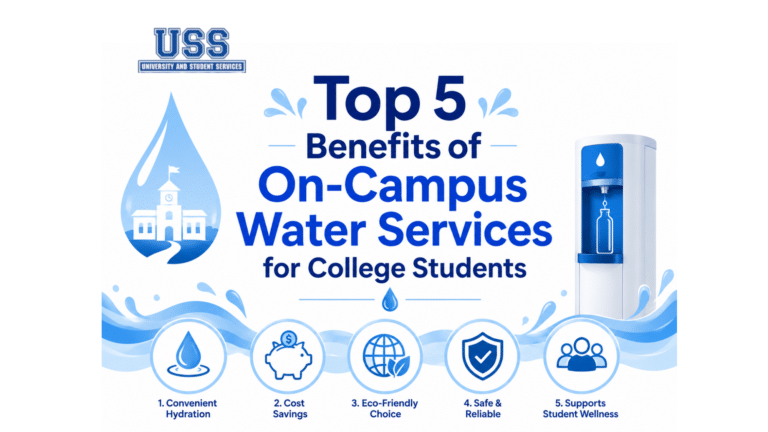
Top 5 Benefits of On-Campus Water Services for College Students
Access to clean, convenient water is an important part of creating a healthy, comfortable, and student-friendly campus environment. For colleges and universities, providing reliable on-campus water services goes beyond simply placing drinking fountains throughout academic buildings and residence halls. Modern water services can support student wellness, improve convenience, reduce reliance on single-use plastic bottles, and contribute to a more sustainable campus.
Students spend significant portions of their day in classrooms, libraries, residence halls, recreation centers, dining facilities, and other campus spaces. Having convenient access to water wherever students live, study, and participate in campus activities can make hydration easier and encourage healthier daily habits.
For higher education institutions, investing in reliable water services can also complement broader campus initiatives focused on sustainability, student satisfaction, wellness, and operational efficiency.
Here are five key benefits of providing on-campus water services for college students.
1. Convenient Access to Drinking Water Encourages Better Hydration
College students have busy schedules. Between classes, studying, extracurricular activities, athletics, work, and social commitments, hydration can easily become an afterthought.
Convenient access to drinking water helps remove one of the simplest barriers to staying hydrated.
When students can easily refill a reusable bottle in a residence hall, student center, academic building, recreation facility, or other high-traffic location, obtaining water becomes part of their normal routine.
Strategically placed water stations can be especially valuable in buildings where students spend extended periods of time. A student studying in a library, attending several classes in one building, or exercising at a recreation center can refill a bottle without having to leave the facility.
We can also consider water access when planning new construction, renovations, residence halls, and student facilities. Locating water services near high-traffic areas makes them easier to use and increases their visibility.
Convenience matters because students are more likely to use a resource that is readily available.
Water Access Across the Student Experience
Effective campus water services can support students in many environments, including:
- Residence halls and dormitories
- Academic buildings
- Libraries
- Student unions
- Recreation centers
- Athletic facilities
- Dining facilities
- Administrative buildings
- Outdoor gathering areas
- Student activity centers
Providing access across these locations creates a more consistent campus experience.
2. On-Campus Water Services Can Support Student Wellness
Hydration is an important component of overall wellness. Students need regular access to fluids throughout the day, particularly when participating in physical activity or spending long periods in classrooms and other indoor environments.
Universities can support healthy routines by making drinking water readily accessible.
Water services can also become part of broader student wellness initiatives. Colleges may incorporate hydration stations into wellness campaigns, orientation programs, residence-life programming, athletic facilities, and campus health initiatives.
For students who regularly carry reusable bottles, convenient refill stations make it easier to maintain their hydration habits without purchasing bottled beverages throughout the day.
This can be particularly beneficial in residence halls, where students may want convenient water access without having to travel to another building.
Supporting Active Students
Athletes and students who participate in recreational activities have additional hydration needs associated with physical activity. Recreation centers, gyms, athletic facilities, and outdoor activity areas can therefore benefit from conveniently positioned water services.
The goal is to create an environment where students can access water as part of their normal activities rather than treating hydration as something they need to plan separately.
3. Water Refill Stations Can Reduce Single-Use Plastic Bottles
Sustainability has become an important consideration for many higher education institutions. Colleges and universities are increasingly looking for practical ways to reduce waste and support environmentally responsible campus operations.
Water refill stations can contribute to these efforts by making reusable bottles more practical for students.
When students have convenient access to refill water, they have less reason to purchase bottled water when they are on campus.
A campus sustainability strategy can combine water services with educational initiatives that encourage students to carry reusable bottles. Universities may also provide reusable bottles during orientation or student welcome programs, creating a direct connection between the bottle and the campus’s water infrastructure.
A Practical Sustainability Initiative
Reducing dependence on disposable plastic bottles can provide several potential benefits:
- Less single-use packaging entering the waste stream
- Greater adoption of reusable water bottles
- Support for campus sustainability goals
- Greater visibility for environmental initiatives
- Potential reduction in purchasing and disposal requirements
- A more convenient experience for students
Water services therefore have the potential to contribute to both student convenience and broader sustainability objectives.
4. Convenient Water Access Can Improve the Student Experience
Student satisfaction is influenced by countless details across campus. While water services may seem like a small amenity, convenient access to basic necessities can contribute to a more comfortable and welcoming environment.
Students spend much of their time navigating campus. When facilities are clean, functional, accessible, and thoughtfully designed, students are more likely to feel that the institution has considered their day-to-day needs.
A modern water refill station can be particularly useful in residence halls and student-facing facilities.
For example, students may appreciate having access to a bottle filling station near residence hall common areas, a dining facility, or a recreation center. Rather than searching for a traditional drinking fountain, students can quickly refill a reusable bottle and continue with their day.
Water Services as a Campus Amenity
Modern students often expect convenient technology and amenities in the places where they live and study. Water services can be incorporated into this broader expectation.
Depending on the system selected, institutions may be able to provide features such as:
- Bottle filling functionality
- Filtration
- Touchless operation
- Usage monitoring
- Accessibility features
- High-capacity dispensing
- Integrated maintenance indicators
These features can help transform a basic water source into a more useful campus amenity.
5. Modern Water Services Can Support Campus Sustainability and Operational Goals
Universities are complex environments with thousands of students, faculty members, staff, visitors, and facilities. Operational decisions therefore need to consider both immediate needs and long-term campus objectives.
On-campus water services can be incorporated into broader facility-management and sustainability strategies.
When universities standardize water service solutions across residence halls, academic buildings, recreation centers, and student facilities, they can create a more consistent approach to hydration access and equipment management.
Maintenance is an important consideration. Water stations and related equipment need to be inspected, cleaned, serviced, and maintained according to the manufacturer’s requirements and the institution’s operational policies.
A planned maintenance program helps keep equipment functional and supports a positive student experience.
Integrating Water Services Into Campus Planning
Water services should ideally be considered during:
- New residence hall construction
- Campus renovations
- Student center development
- Recreation facility upgrades
- Sustainability initiatives
- Residence-life improvements
- Accessibility planning
- Facility modernization projects
Planning early can help institutions determine the most appropriate equipment locations, plumbing requirements, electrical needs, maintenance access, and expected usage.
Choosing the Right On-Campus Water Service Solution
Not every campus has the same requirements. A small college with a compact campus may need a different approach from a large university with multiple residence halls, athletic facilities, and satellite buildings.
We should evaluate several factors when selecting campus water services, including the number of students served, building usage, expected demand, available infrastructure, maintenance requirements, accessibility, installation requirements, and long-term operating considerations.
Location and Usage
The best location for a water station depends on how students use the building. High-traffic areas are often logical candidates, but placement should also consider accessibility, plumbing availability, visibility, and maintenance access.
Filtration and Water Quality
Where filtration is part of the selected system, the filtration technology should be appropriate for the application and maintained according to manufacturer specifications.
Durability
Campus equipment experiences frequent use. Water services should be designed for environments where students and staff may use equipment repeatedly throughout the day.
Accessibility
Water stations should be evaluated for accessibility and positioned in a way that allows students with different mobility needs to use them comfortably.
Maintenance
Facility teams should understand filter replacement schedules, cleaning procedures, service requirements, and replacement-part availability before implementing a large-scale water service program.
Build a Better Campus Water Experience With University and Student Services
Reliable water access is a practical investment in the student experience. From residence halls and academic buildings to recreation centers and student activity spaces, strategically designed on-campus water services can help universities make hydration more convenient while supporting wellness, sustainability, and modern campus expectations.
University and Student Services can help institutions evaluate water service needs and identify solutions appropriate for student housing, campus facilities, and other higher education environments.
Whether the goal is to improve residence-hall amenities, support a campus sustainability initiative, modernize student facilities, or expand access to convenient drinking water, the right solution should be designed around the institution’s students, buildings, infrastructure, and operational requirements.
Contact University and Student Services today to discuss your campus water service needs and explore solutions that can help create a more convenient, sustainable, and student-focused campus environment.
Key Takeaways
The five primary benefits of on-campus water services for college students include:
- Improved convenience — Students can access water throughout the campus as part of their daily routines.
- Support for student wellness — Convenient hydration access can encourage healthier habits.
- Reduced reliance on single-use plastic bottles — Refill stations can support reusable-bottle programs and sustainability efforts.
- A better student experience — Modern water amenities can make residence halls and campus facilities more convenient and welcoming.
- Support for campus goals — Water services can complement sustainability, facility modernization, and student-service initiatives.
When thoughtfully planned and properly maintained, campus water services can become an important part of a modern higher education environment—providing a practical amenity that benefits students while supporting institutional priorities.
Frequently Asked Questions About On-Campus Water Services
What are on-campus water services?
On-campus water services include drinking water and bottle-filling solutions installed throughout college and university facilities. Depending on the equipment, these services may include filtered water, bottle filling stations, touchless dispensing, and other features designed to make hydration more convenient.
Why should colleges provide water refill stations?
Water refill stations make drinking water more convenient for students and can encourage the use of reusable bottles. They can also support student wellness, campus sustainability initiatives, and a more convenient overall campus experience.
Where should universities install water refill stations?
Common locations include residence halls, academic buildings, libraries, student unions, recreation centers, athletic facilities, dining areas, and other high-traffic student spaces. Placement should account for student usage patterns, accessibility, infrastructure, and maintenance requirements.
Can water services help reduce plastic bottle waste on campus?
Yes. Convenient refill stations can make reusable bottles more practical and potentially reduce students’ reliance on single-use bottled water.
Are water refill stations suitable for residence halls?
Yes. Residence halls can be strong candidates because students spend substantial amounts of time there. Convenient water access can make it easier for residents to refill reusable bottles without leaving the building.
How often do campus water stations need maintenance?
Maintenance frequency depends on the equipment, usage, filtration technology, manufacturer recommendations, and institutional maintenance policies. Regular inspection and servicing are important for keeping equipment clean, functional, and reliable.
What should universities consider when selecting a water service provider?
Universities should consider product quality, installation requirements, maintenance support, equipment durability, accessibility, filtration options, service availability, and the provider’s ability to support the scale and needs of the institution.