
Choosing the Right Water Delivery Service Near Campus
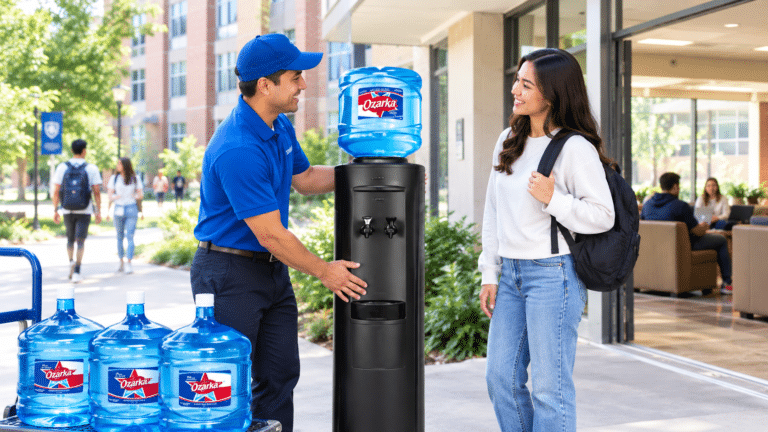
Choosing the right water delivery service near campus is essential for maintaining convenient access to clean drinking water in university housing, student apartments, dormitories, administrative offices, and campus facilities. With busy academic schedules, limited transportation options, and the daily demands of university life, students and campus administrators benefit from a dependable water delivery provider that offers consistent service, flexible delivery schedules, and convenient ordering options.
Whether a university needs bulk bottled water for residential halls or students want a convenient way to keep drinking water available in their apartments, the right provider can simplify daily routines and support a more comfortable campus environment. However, not every water delivery company offers the same level of service, product selection, pricing, or reliability.
Understanding what to look for in a water delivery provider helps universities, student organizations, housing managers, and individual students make informed decisions. From evaluating water quality and delivery coverage to comparing costs and customer support, several important factors can help determine which service best meets campus needs.
Why Water Delivery Services Matter for Universities and Students
Access to drinking water is a basic necessity in any educational environment. Universities accommodate thousands of students, faculty members, administrators, and visitors who need convenient access to drinking water throughout the day. A reliable campus water delivery service can help meet these needs without requiring individuals or university staff to purchase and transport heavy water containers themselves.
For students living in dormitories or off-campus apartments, scheduled water delivery can reduce the time spent shopping for bottled water. This convenience is especially valuable for students who do not own vehicles, have demanding class schedules, or prefer to have essential supplies delivered directly to their residences.
Universities can also benefit from centralized water delivery arrangements. Instead of coordinating frequent individual purchases, housing departments and facility managers can establish recurring deliveries based on occupancy, consumption patterns, and operational requirements.
Common campus applications include:
- Student dormitories: Maintain convenient access to drinking water for residents.
- Off-campus student housing: Provide scheduled deliveries directly to apartments and shared residences.
- Administrative offices: Keep drinking water available for employees, meetings, and visitors.
- Libraries and study centers: Support students who spend extended periods studying on campus.
- Campus events: Supply bottled water for orientations, conferences, seminars, and student activities.
- Athletic facilities: Provide drinking water for training sessions, sports events, and recreational programs.
By choosing a provider that understands these different requirements, universities and students can establish a practical, dependable water supply arrangement.
1. Evaluate Water Quality and Safety Standards
Water quality should be one of the first considerations when comparing water delivery companies. Students and university administrators need confidence that the water they receive is handled, packaged, transported, and stored appropriately.
Before selecting a provider, ask where the water comes from and how it is treated. Depending on the product, treatment methods may include filtration, reverse osmosis, ultraviolet disinfection, or other processes designed to meet applicable drinking water standards.
A reputable company should be able to explain its water treatment processes and provide relevant information about product quality. Where applicable, check whether the provider complies with local drinking water regulations and holds the permits or certifications required in its service area.
It is also important to consider packaging and handling practices. Bottles and containers should arrive properly sealed and undamaged. Delivery personnel should follow appropriate handling procedures, and customers should receive clear guidance on storing water away from direct sunlight, excessive heat, and potential contaminants.
For universities arranging large or recurring orders, requesting documentation about water quality and supplier procedures can help establish a consistent procurement process.
What to check before ordering:
- Source and treatment method of the drinking water.
- Applicable regulatory compliance and available quality documentation.
- Packaging integrity and container cleanliness.
- Recommended storage conditions and shelf-life information.
- Procedures for reporting quality concerns or damaged products.
Prioritizing these factors helps students and institutions select a water delivery service that takes product quality seriously.
2. Confirm Delivery Coverage Near Campus
A water delivery company may advertise service throughout a city but have limited coverage in particular neighborhoods, student housing developments, or university districts. Confirming the provider’s actual delivery area can prevent delays and unnecessary ordering complications.
Students should check whether the company delivers directly to their dormitory, apartment building, or residential complex. Some properties have designated delivery entrances, security restrictions, or rules about deliveries during certain hours. A provider familiar with these arrangements may make the process more convenient.
Universities should evaluate coverage across all relevant facilities, particularly when housing, administrative offices, athletic centers, and satellite campuses are located in different areas.
Before committing to a service, ask about:
- Delivery availability within the university’s immediate area.
- Minimum order requirements for residential and commercial customers.
- Delivery schedules for dormitories and apartment buildings.
- Access restrictions, parking arrangements, and designated drop-off locations.
- Additional fees for remote locations or special delivery requests.
A company with suitable local coverage can help ensure that water arrives where it is needed without requiring students or staff to transport heavy containers across campus.
3. Compare Water Delivery Prices and Available Plans
Cost is an important consideration for students managing limited budgets and universities overseeing operating expenses. However, the lowest advertised price does not always represent the best overall value.
When comparing a water delivery service near campus, examine the complete cost of each option. This includes the price per bottle or container, delivery fees, minimum order quantities, refundable deposits, equipment rental charges, and any additional fees associated with recurring deliveries.
Some providers offer individual orders, while others provide subscription plans or volume-based pricing. Students living alone may prefer smaller orders with flexible scheduling. Shared apartments and university departments may benefit from larger deliveries that reduce the cost per unit.
Universities purchasing water regularly should request a detailed quotation based on expected consumption. Comparing several providers using the same order quantity and delivery frequency makes it easier to identify the most economical option.
Consider the following factors:
Pricing factor | What to evaluate |
Price per bottle | Compare the cost of equivalent water products and container sizes. |
Delivery fees | Determine whether delivery is included or charged separately. |
Minimum order | Check whether the required quantity suits individual or institutional needs. |
Subscription discounts | Ask whether recurring orders qualify for reduced pricing. |
Container deposits | Confirm whether reusable containers require refundable deposits. |
Equipment costs | Review any rental, maintenance, or dispenser-related charges. |
Cancellation policy | Understand the rules for changing or ending recurring orders. |
A transparent pricing structure helps students plan their expenses and allows university administrators to budget for ongoing water requirements.
4. Choose a Delivery Schedule That Fits Campus Life
University schedules can change throughout the academic year. Students may have examinations, laboratory sessions, internships, extracurricular activities, and irregular study hours. Campus offices may also experience fluctuations in water consumption during orientation, graduation, conferences, and semester breaks.
A dependable water delivery provider should offer scheduling options that accommodate these variations.
For individual students, weekly, biweekly, or monthly delivery may be appropriate depending on household size and consumption. Students sharing an apartment can estimate their collective needs and arrange deliveries before supplies run low.
University facilities may require more structured arrangements. Dormitories, offices, and event spaces can benefit from recurring delivery schedules, with additional orders available when demand increases.
Ask whether the company offers advance scheduling, delivery reminders, order adjustments, and clear procedures for rescheduling. It is also useful to understand the provider’s policy for holidays, severe weather, and unexpected delivery disruptions.
Reliable scheduling helps prevent both shortages and excess inventory. By matching delivery frequency to actual consumption, students and institutions can maintain a convenient supply without dedicating unnecessary storage space to bottled water.
5. Review Water Products, Bottle Sizes, and Dispenser Options
Different campus environments require different water products. A student living in a small dormitory room may prefer compact bottles, while a shared apartment may find larger reusable water containers more economical.
Universities may need several product options to serve different facilities. Large-volume containers can support water dispensers in offices, residential common areas, and staff rooms. Individual bottles may be appropriate for conferences, athletic events, and temporary campus activities.
When reviewing a supplier’s product range, consider:
- Bottled drinking water: Suitable for individual use and portable hydration.
- Large water containers: Useful for shared residences, offices, and common areas.
- Water dispensers: Provide convenient access to water in designated locations.
- Hot-and-cold dispensers: May be appropriate where hot and chilled water are needed.
- Reusable bottle programs: Can help reduce packaging waste when supported by suitable collection and sanitation procedures.
- Bulk event orders: Useful for student orientations, meetings, and campus functions.
If a dispenser is included, ask who handles installation, cleaning instructions, maintenance, and repairs. Universities should also determine whether equipment is purchased, rented, or provided under a service agreement.
Selecting products that fit the intended location helps control costs and makes water more accessible to students and staff.
6. Assess Delivery Reliability and Customer Support
A water delivery service is only useful when it consistently fulfills orders. Missed deliveries can inconvenience students and disrupt university operations, particularly in buildings that depend on scheduled supplies.
Before choosing a provider, review customer feedback and look for recurring comments about punctuality, order accuracy, communication, and problem resolution. A single review may not represent the company’s overall performance, so consider patterns across multiple reviews and recent customer experiences.
Customer support is equally important. Students should be able to contact the provider if an order arrives late, a container is damaged, or a delivery address needs to be changed.
University procurement teams may require a more formal service arrangement that includes a designated account representative, documented delivery schedules, clear invoicing, and procedures for urgent orders.
Useful questions include:
- How are customers notified about delivery delays?
- Can orders be changed after they have been scheduled?
- What happens if a delivery is missed?
- How are damaged containers or product quality concerns handled?
- Is customer support available through phone, email, or online ordering?
- Can the provider accommodate higher demand during major campus events?
A company with responsive customer service can make ongoing water delivery easier to manage, particularly for institutions coordinating orders across multiple locations.
7. Consider Sustainability and Responsible Packaging
Environmental responsibility is increasingly relevant to university operations and student purchasing decisions. Water delivery can create packaging waste, transportation emissions, and additional resource demands, depending on the products and delivery arrangements involved.
Students and campus administrators can evaluate providers that offer reusable containers, returnable bottle programs, bulk delivery options, or packaging designed to reduce material use.
Reusable containers can be particularly practical for offices and shared facilities when the supplier has clear collection, cleaning, inspection, and replacement procedures. Universities should verify that reusable systems maintain appropriate hygiene standards.
It is also worth considering delivery efficiency. Consolidating orders for several departments or nearby residential buildings may reduce the number of separate trips required, depending on the supplier’s route planning and operating practices.
Sustainability claims should be evaluated carefully. Ask providers to explain their packaging materials, container-return procedures, and relevant environmental initiatives rather than relying exclusively on general marketing statements.
For universities with sustainability policies, water procurement can become part of a broader effort to reduce avoidable waste while maintaining convenient access to drinking water.
8. Understand Ordering Requirements for Dormitories and Student Apartments
Residential delivery can involve practical challenges that do not arise in traditional commercial settings. Dormitories may have reception desks, restricted access, security procedures, or designated delivery periods. Apartment buildings may require gate codes, parking instructions, or coordination with property management.
Before placing an order, students should verify the building’s delivery rules and provide accurate instructions. If a provider cannot deliver directly to individual rooms, confirm whether orders must be collected from a lobby, reception area, or designated storage point.
Students sharing housing should also agree on how orders will be placed, paid for, and divided among residents. A shared ordering arrangement can simplify scheduling and reduce duplicate deliveries, but responsibilities should be clearly established.
University housing managers can help by publishing approved delivery instructions and identifying appropriate drop-off areas. Where large water containers are involved, consider how residents will transport them safely and whether the building has suitable storage space.
These small logistical details can significantly improve the convenience of a campus water delivery arrangement.
9. Estimate Water Needs Before Selecting a Provider
Ordering the right quantity helps prevent supply interruptions, unnecessary spending, and storage problems. Water consumption varies according to climate, activity levels, occupancy, available drinking fountains, meal arrangements, and personal preferences.
Students can begin by tracking their household’s consumption over one or two weeks. This provides a practical baseline for choosing an appropriate order size and delivery frequency.
University departments should estimate demand using occupancy, historical consumption, and scheduled events. A residence hall, for example, may require a different supply plan from a small administrative office.
A simple planning process includes:
- Identify the users. Determine how many students, employees, or visitors need access to the water supply.
- Review existing access. Account for drinking fountains, kitchen taps, filtration systems, and other available sources.
- Estimate consumption. Use observed usage rather than relying entirely on generalized assumptions.
- Assess storage capacity. Confirm that the location can safely accommodate the planned delivery quantity.
- Set a delivery frequency. Choose an interval that maintains adequate supplies without creating excess inventory.
- Review actual usage. Adjust order quantities as enrollment, occupancy, and seasonal demand change.
Planning around real consumption patterns makes water delivery more predictable and cost-effective.
10. Create a Checklist for Comparing Water Delivery Services Near Campus
Once several providers have been identified, use a consistent evaluation checklist to compare their suitability.
Evaluation category | Key question |
Water quality | Can the provider explain its water source, treatment, and applicable compliance requirements? |
Service coverage | Does it deliver to the specific campus or residential address? |
Pricing | Are product prices, delivery fees, and deposits clearly disclosed? |
Scheduling | Can delivery frequency be adjusted to match academic and operational schedules? |
Product selection | Are suitable bottle sizes, containers, and dispensers available? |
Reliability | Does the provider have a record of fulfilling orders as scheduled? |
Customer service | Is there a clear process for addressing delays and order problems? |
Sustainability | Are reusable containers or other waste-reduction options available? |
Storage and access | Can deliveries be accommodated within the building’s rules and available space? |
Contract terms | Are recurring-order commitments, cancellation terms, and payment requirements clear? |
For universities, it may be helpful to request proposals from multiple suppliers and evaluate them against a shared set of requirements. Students can use the same checklist on a smaller scale, focusing on affordability, convenience, and the specific needs of their residence.
The goal is to select a provider that delivers consistent value, not simply the company with the lowest introductory price.
Find the Right Water Delivery Service Near Campus
Choosing the right water delivery service near campus requires careful consideration of water quality, delivery coverage, pricing, scheduling, product selection, reliability, and sustainability. Students need a convenient and affordable way to maintain their drinking water supply, while universities must coordinate deliveries that support residential facilities, administrative offices, and campus events.
By comparing providers systematically, reviewing service terms, and estimating actual consumption, students and institutions can develop a water delivery arrangement that fits their budgets and operational requirements.
A reliable supplier should make ordering straightforward, communicate clearly, and provide products and delivery options suited to the campus environment. Taking the time to evaluate these factors can help reduce unnecessary costs and create a more convenient experience for everyone who depends on the service.
Partner With University and Student Services for Campus Water Delivery
University and Student Services can help universities, housing administrators, and students identify practical solutions for coordinating essential campus services. Whether your institution is arranging water deliveries for student residences, planning supplies for university events, or exploring recurring delivery options for campus facilities, the right support can simplify the process.
Contact University and Student Services today to discuss your campus needs, explore available service options, and identify a convenient approach to coordinating water delivery near your university. Visit our website to learn more about how we can support a more organized and comfortable campus experience.
Frequently Asked Questions About Water Delivery Services Near Campus
1. How do I find a reliable water delivery service near campus?
Start by searching for providers that serve your university’s neighborhood and deliver directly to your dormitory, apartment, or campus facility. Compare water quality information, pricing, delivery schedules, product options, and recent customer reviews. Confirm the company’s delivery policies and ask how it handles delays, damaged containers, and order changes before placing a recurring order.
2. How much does campus water delivery typically cost?
Costs depend on the type and quantity of water ordered, container size, delivery distance, order frequency, and any equipment or deposit requirements. Some providers offer discounts for recurring or bulk orders, while others charge separate delivery fees. Request a complete price breakdown and compare providers using equivalent products and quantities.
3. Can water be delivered directly to college dormitories?
Many water delivery companies serve residential buildings, but access depends on the provider’s delivery policies and the dormitory’s rules. Students should confirm whether deliveries can be made to the building entrance, reception desk, designated delivery area, or individual residence. Check whether identification, advance notice, or specific delivery hours are required.
4. What type of bottled water is best for students?
The most suitable option depends on personal preference, budget, storage space, and availability. Students may choose bottled spring water, purified water, or other drinking water products that meet applicable quality requirements. Compare product information, container sizes, packaging, and total delivery costs before selecting a regular supply.
5. Are water delivery subscriptions worth it for college students?
Subscriptions can be convenient for students who use a predictable amount of water and prefer automatic recurring deliveries. However, they are not ideal for everyone, especially students who move frequently or leave campus during academic breaks. Review minimum order quantities, delivery fees, modification policies, and cancellation terms before subscribing.
6. Can universities arrange bulk water delivery for campus events?
Many water suppliers accommodate bulk orders for orientations, conferences, athletic activities, and other university events. Availability depends on the provider’s capacity, service area, and scheduling requirements. Institutions should provide estimated attendance, delivery locations, event dates, and preferred packaging formats when requesting a quotation.
7. How often should students schedule water delivery?
Delivery frequency depends on the number of residents, consumption habits, available storage, and container size. Students can track their usage over several weeks and select a schedule that replenishes supplies before they run out. Shared apartments may benefit from consolidated orders, while students living alone may prefer smaller, less frequent deliveries.
8. Do water delivery companies provide water dispensers?
Some providers sell or rent dispensers, and others include equipment options with qualifying delivery plans. Available equipment may support large water containers or offer hot-and-cold water functions. Before choosing a dispenser, check the cost, installation requirements, cleaning instructions, maintenance responsibilities, and container compatibility.
9. What should universities consider when selecting a water delivery company?
Universities should evaluate water quality, regulatory compliance, delivery reliability, total cost, service coverage, product availability, storage requirements, and customer support. Institutions ordering for multiple buildings may also need consolidated billing, recurring schedules, volume-based pricing, and a designated account contact. A written service agreement can clarify responsibilities and expectations.
10. How can campus water delivery reduce environmental waste?
Depending on the provider and product, campuses may reduce packaging waste by using returnable containers, reusable bottles, refill stations, and consolidated deliveries. Institutions should compare the practical environmental benefits of available options and confirm that reusable containers are handled and sanitized appropriately. Reducing unnecessary orders and choosing suitable delivery quantities can also help limit waste.
11. Can water delivery be scheduled during university holidays?
Some providers allow customers to pause, reschedule, or modify recurring orders during semester breaks and holidays. Policies vary by company, so students and university administrators should confirm the available options in advance. Updating schedules before campus occupancy changes can help prevent unnecessary deliveries and storage problems.
12. How can University and Student Services help coordinate campus water delivery?
University and Student Services can help institutions and students explore service options that fit their operational needs. Depending on the services available, support may include identifying appropriate providers, coordinating requirements, or helping organize campus-related arrangements. Contact University and Student Services directly to confirm available assistance, service coverage, and the next steps for your university.