
Shared Room Solutions: How a MicroFridge® Rental Keeps the Peace
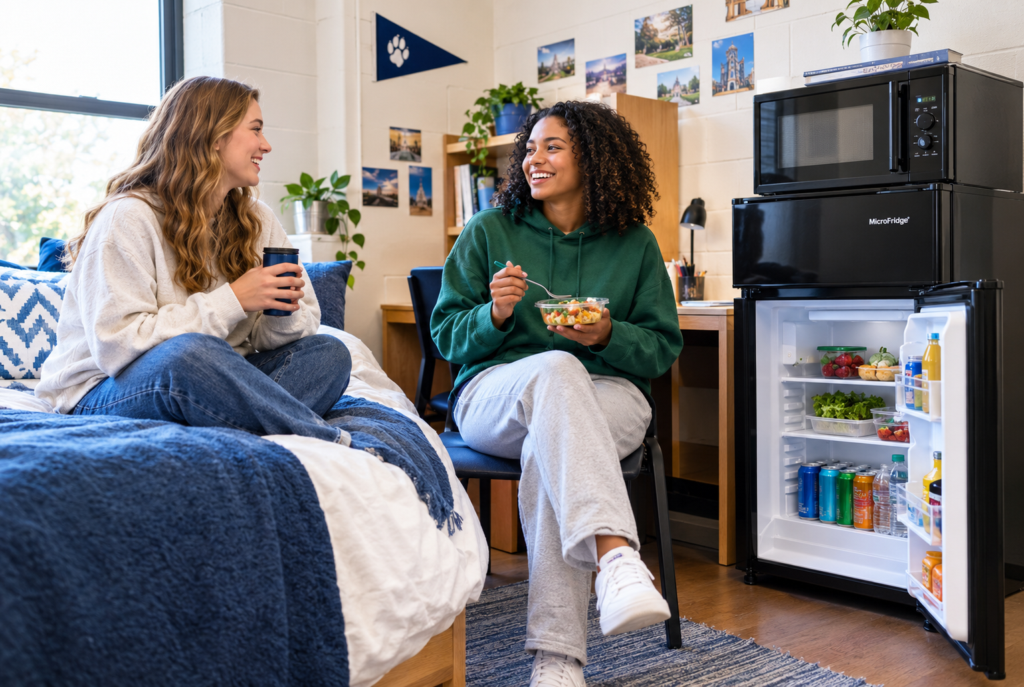
A MicroFridge® Rental gives students sharing a residence hall room a convenient, space-efficient way to store food and keep personal items organized. By providing separate refrigerator and microwave access without requiring students to purchase, transport, or store bulky appliances, universities can reduce roommate conflicts while improving convenience and the overall residential experience.
Shared rooms can create friction when students have limited space and different schedules, eating habits, and expectations about personal belongings. A university-managed refrigerator and microwave program can help address these challenges by:
- Giving roommates convenient access to food storage and preparation.
- Reducing the need for students to purchase and transport appliances.
- Making limited residence-hall space easier to manage.
- Simplifying move-in and move-out logistics.
- Providing a consistent amenity across eligible residence halls.
- Creating opportunities for housing departments to offer value-added services.
For universities, the benefit extends beyond the appliance itself. A well-managed rental program can support a smoother student experience while reducing the logistical demands placed on housing and residence-life teams.
Why Shared Rooms Can Become a Housing Challenge
Sharing a room requires students to negotiate limited space, different schedules, and different lifestyles. Even relatively small issues can become recurring sources of frustration.
A refrigerator and microwave may seem like simple amenities, but they can create several practical problems when students are expected to provide their own equipment.
Common challenges include:
- Limited floor and counter space: Two students may each want their own small appliance.
- Transportation difficulties: Moving appliances into residence halls can be difficult for students traveling from another city or state.
- Unequal access: One roommate may purchase an appliance while the other uses it frequently.
- Move-out complications: Students must determine what happens to bulky appliances at the end of the academic year.
- Storage concerns: Appliances purchased for college may have to be transported or stored during summer break.
- Safety and policy considerations: Housing departments must establish rules for which appliances students can bring into rooms.
The result is that an apparently minor amenity can become part of a much larger student-housing logistics issue.
How MicroFridge® Rental Supports Better Roommate Experiences
A MicroFridge® Rental program can establish a shared resource from the beginning of the academic year. Instead of roommates negotiating who purchases a refrigerator or microwave, the university can provide a standardized option designed for residential use.
1. Creates a Shared Amenity
When an appliance is provided as part of a structured housing program, roommates do not have to decide who purchases the equipment.
Clear policies can establish expectations around:
- Appliance use
- Food storage
- Cleaning
- Personal items
- Maintenance reporting
- End-of-year procedures
That clarity can prevent disagreements before they start.
2. Saves Valuable Room Space
Residence-hall rooms are designed around efficient use of limited square footage. Adding multiple student-owned appliances can quickly consume available space.
A coordinated appliance solution helps housing teams standardize where equipment is placed and how it fits within the room.
3. Reduces Move-In Hassles
Parents and students already have significant responsibilities during move-in. Transporting a refrigerator or microwave adds another item to an already crowded vehicle or moving process.
A university-provided rental eliminates the need to purchase, transport, and install comparable equipment independently.
This can contribute to a more predictable move-in experience for students, families, and housing staff.
4. Simplifies Move-Out
The benefits continue beyond move-in.
Without a rental program, students may need to:
- Determine whether to take appliances home.
- Find temporary storage.
- Sell or donate unwanted equipment.
- Transport appliances during a busy move-out period.
A managed rental program can make the end-of-year process more straightforward because students are not responsible for removing university-coordinated equipment.
University Benefits Beyond Student Convenience
The strongest housing programs look beyond individual amenities and evaluate how a service affects the entire residential operation.
Housing Challenge | Managed Appliance Program Benefit |
Crowded move-in days | Fewer student-owned appliances to transport |
Limited room space | Standardized equipment footprint |
Student complaints | Clearer amenity expectations |
Summer storage concerns | Less equipment for students to store |
Staff workload | Centralized program administration |
Parent concerns | More convenient transition experience |
Premium amenity expectations | Added value within student housing |
Budget pressure | Potential program-based revenue opportunities |
For housing leaders, this distinction is important: the value of an amenity is not limited to what it provides inside the room. Its operational impact can be equally significant.
A Better Approach to Shared-Room Amenities
Universities considering appliance rentals should evaluate the program as part of the broader student-housing experience.
Standardize the Student Experience
Consistency matters when managing thousands of residents. Standardized appliances can help reduce variation between rooms and residence halls.
Communicate Expectations Early
Students and parents should know what is included, what they are allowed to bring, and how maintenance issues are handled before move-in.
Effective communications can include:
- Housing website information
- Orientation materials
- Move-in checklists
- Residence-life emails
- Parent communications
- Residence-hall signage
Connect the Program to Move-In Planning
An appliance rental program should be integrated into housing operations rather than treated as a standalone purchase.
Housing teams can coordinate delivery schedules, room assignments, maintenance procedures, and student communications before peak move-in activity.
Measure More Than Rentals
Program performance can be evaluated using operational and student-experience indicators such as:
- Rental participation
- Service requests
- Maintenance response times
- Student satisfaction
- Parent feedback
- Move-in-related complaints
- Move-out-related questions
- Revenue generated for eligible programs
This creates a more complete picture of whether the amenity is delivering value.
Why Convenience Matters to Students and Families
For many families, college move-in is a major logistical undertaking. A student may be traveling hundreds or thousands of miles, while parents are trying to coordinate purchases, transportation, housing requirements, and academic preparations.
Removing even a few logistical responsibilities can make the transition easier.
A university that provides convenient residential amenities demonstrates that it understands an important aspect of student life: small operational details can have an outsized effect on how students experience campus.
That is especially relevant during the first year, when students are forming their initial impressions of their university and residential community.
Choosing a Scalable Student Appliance Program
A successful program needs to work at institutional scale. Housing departments should consider several factors before selecting a provider.
Key Decision Criteria
University experience: Look for a provider familiar with higher-education housing environments.
Scalability: The solution should accommodate individual residence halls as well as large student populations.
Customer service: Students need an accessible process for questions, service requests, and issue resolution.
Operational support: A provider should help reduce—not increase—the workload placed on university staff.
Revenue opportunities: Where applicable, housing leaders should evaluate whether the program can support fundraising or revenue-sharing objectives.
Program consistency: Equipment, policies, communications, and service should be manageable across multiple housing locations.
Turning a Simple Appliance Into a Better Housing Experience
A refrigerator and microwave may not be the first amenities considered when universities evaluate student satisfaction. However, residential life is built from hundreds of everyday experiences.
Students notice whether their rooms are functional. Parents notice whether move-in is organized. Housing teams notice whether a program creates additional work or removes it.
That makes managed appliance rentals worth evaluating as part of a comprehensive residence-life strategy.
The goal is not simply to put an appliance in a room. It is to create a more predictable, convenient, and manageable housing experience for students, families, and university staff.
Explore MicroFridge® Rental Solutions for Your Campus
University housing programs should make student life easier without creating another administrative burden for staff. A coordinated appliance rental solution can help provide practical room amenities while supporting smoother move-in and move-out processes.
Ready to explore a solution for your residence halls? Connect with University and Student Services to discuss your campus population, housing requirements, and potential program options.
Make shared-room living easier. Give students the convenience they need while giving housing teams a program they can manage.
FAQ
What is a MicroFridge® rental?
A MicroFridge® rental is a student-housing appliance service that provides refrigerator and microwave functionality for eligible residence-hall rooms through a managed rental program.
How can a refrigerator and microwave help roommates?
Providing a shared appliance gives roommates a common amenity without requiring one student to purchase and transport the equipment, helping establish clearer expectations around shared use.
Can appliance rentals simplify college move-in?
Yes. A university-managed appliance program can reduce the number of bulky items students and parents need to purchase and transport during move-in.
Do appliance rental programs help with move-out?
They can. When appliances are managed through a rental program, students generally do not have to determine how to sell, transport, donate, or store comparable equipment at the end of the academic year.
What should universities consider when selecting an appliance rental provider?
Universities should evaluate higher-education experience, scalability, customer service, operational support, maintenance processes, student experience, and potential revenue or fundraising opportunities.