
MicroFridge® Rental Hacks: How Students Maximize Functionality
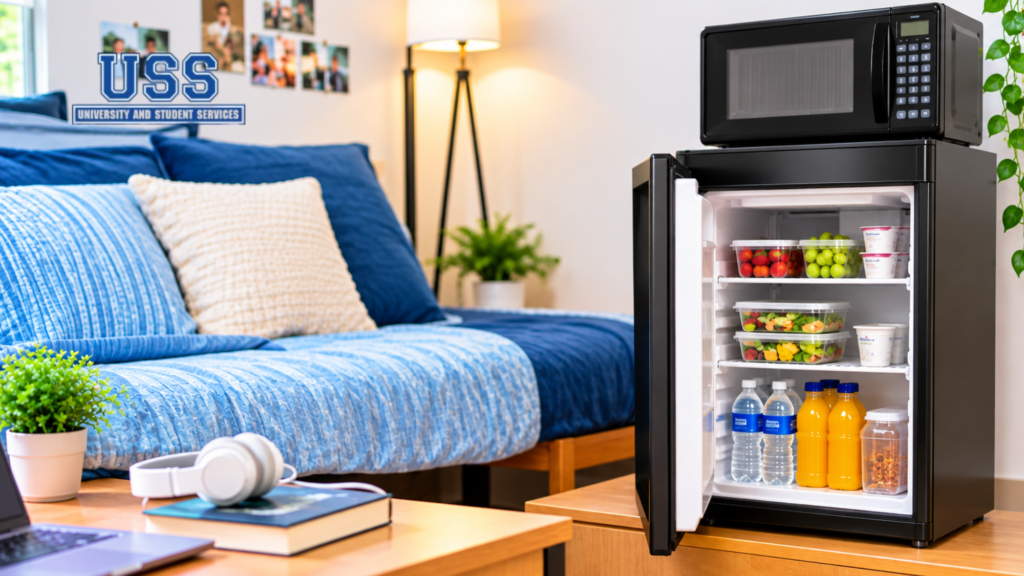
MicroFridge® rental hacks can help college students make the most of limited dorm room space, simplify meal preparation, and create a more organized living environment. With a combination of a compact refrigerator, freezer, and microwave, a MicroFridge® provides convenient access to food storage and quick meals without requiring a full kitchen.
For students living in residence halls, space is often limited, shared kitchen facilities may be inconvenient, and busy academic schedules leave little time for preparing meals. A MicroFridge® offers a practical solution by combining essential appliances into one compact unit.
However, getting the most value from a MicroFridge® rental involves more than simply plugging it in and stocking it with food. Smart organization, proper food storage, efficient meal planning, and a few space-saving strategies can significantly improve its functionality.
Let’s explore practical MicroFridge® rental hacks that help students maximize convenience, save space, reduce food waste, and make dorm living easier.
What Is a MicroFridge® and Why Is It Useful for College Students?
A MicroFridge® is a compact combination appliance designed to provide convenient food storage and microwave cooking in a small footprint. Depending on the model, it typically combines a refrigerator, freezer compartment, and microwave into one integrated unit.
This combination is particularly useful in college residence halls where students may have limited access to traditional kitchen appliances.
Instead of purchasing separate appliances, students can use a single MicroFridge® to store beverages, snacks, leftovers, frozen meals, and other everyday food items.
Some of the primary benefits include:
- Space efficiency: Combines multiple appliances into a compact footprint.
- Convenience: Makes snacks, drinks, and quick meals accessible inside the dorm room.
- Food storage: Provides refrigeration for perishable groceries and leftovers.
- Meal flexibility: Allows students to prepare microwave-friendly meals.
- Organization: Creates a designated area for food and beverages.
- Budget management: Helps students store groceries and reduce dependence on expensive convenience meals.
When available through a campus-approved rental program, MicroFridge® units also offer students a convenient alternative to purchasing, transporting, and eventually reselling bulky appliances.
10 MicroFridge® Rental Hacks to Maximize Functionality
Getting the most out of a MicroFridge® starts with using its available space efficiently. These practical strategies can help students organize their appliances, improve everyday convenience, and make dorm room living more manageable.
1. Organize Food Using Stackable Storage Containers
One of the easiest MicroFridge® rental hacks is to use stackable food storage containers.
Dorm refrigerators have limited interior space, so placing groceries, leftovers, and snacks randomly on shelves can quickly create clutter.
Instead, we recommend using appropriately sized, food-safe containers to organize different food categories.
For example:
- Use small containers for cut fruit and vegetables.
- Store leftovers in airtight containers.
- Use shallow containers for meal-prepped ingredients.
- Keep snacks in clearly labeled containers.
- Choose stackable containers to maximize vertical storage.
Transparent containers are particularly helpful because students can identify their food without opening multiple packages.
Before purchasing containers, measure the refrigerator’s interior dimensions to ensure they fit comfortably without blocking airflow.
2. Create a Dedicated Beverage Storage Area
Drinks can take up a considerable amount of refrigerator space, especially when students purchase bottled water, juice, milk, and other beverages.
Creating a dedicated beverage section helps prevent drinks from competing with food storage.
We recommend grouping beverages together and placing them in an area where they can be accessed easily.
Students can also consider purchasing smaller beverage packages rather than oversized containers that occupy too much space.
However, avoid overcrowding refrigerator shelves. Proper airflow is important for maintaining consistent cooling temperatures.
3. Plan Meals Around Microwave-Friendly Ingredients
A MicroFridge® makes it easier to prepare quick meals without needing access to a communal kitchen.
Students can maximize its functionality by choosing ingredients that require minimal preparation.
Examples include:
- Microwaveable rice and grain bowls.
- Frozen vegetables.
- Oatmeal and instant breakfast options.
- Microwave-friendly soups.
- Pre-cooked chicken and other refrigerated proteins.
- Frozen meals designed for microwave preparation.
- Microwaveable potatoes.
- Ready-to-eat salads and sandwich ingredients.
Combining refrigerated ingredients with microwave-friendly foods can create more balanced meals while reducing preparation time.
Students should always follow food packaging instructions and use microwave-safe dishes.
4. Use the Freezer for Budget-Friendly Meal Planning
The freezer compartment can help students save money and reduce food waste.
Instead of purchasing individual meals every day, students can keep selected frozen foods available for busy academic schedules.
Useful freezer items may include:
- Frozen vegetables.
- Frozen fruit for smoothies, where preparation equipment is available.
- Individually portioned meals.
- Frozen breakfast options.
- Ice packs.
- Other appropriately packaged frozen foods.
Portioning food before freezing can make meal preparation more convenient.
For example, students can divide larger packages into individual servings and label them with the contents and date.
It is important to remember that freezer compartments vary in size and temperature performance. Students should check their specific MicroFridge® model’s instructions and avoid assuming that every compartment is suitable for long-term frozen food storage.
5. Keep Frequently Used Items Within Easy Reach
A well-organized refrigerator saves time, especially when students have classes, assignments, and extracurricular activities throughout the day.
We recommend arranging food according to how frequently it is used.
Keep everyday essentials, such as beverages, yogurt, snacks, and frequently accessed ingredients, in convenient locations.
Less frequently used items can be placed toward the back, provided they remain visible and properly stored.
A simple organization system can include:
Storage Area | Suggested Items |
Upper shelf | Leftovers and ready-to-eat foods |
Middle shelf | Dairy products and frequently used ingredients |
Lower shelf | Properly packaged raw ingredients, if stored |
Door compartments | Suitable condiments and beverages |
Freezer | Frozen meals and vegetables |
Actual refrigerator configurations vary, so students should follow the manufacturer’s food storage recommendations.
6. Use a Weekly Grocery and Restocking Schedule
One common dorm room problem is purchasing more groceries than the available refrigerator can accommodate.
A weekly grocery schedule helps students avoid overcrowding and unnecessary food waste.
Before shopping, check the refrigerator and freezer to identify what needs to be used.
Then create a grocery list based on:
- Upcoming class schedules.
- Planned meals.
- Available refrigerator space.
- Food expiration dates.
- Personal dietary preferences.
- Weekly grocery budget.
Buying smaller quantities more frequently may be more practical than purchasing large amounts of perishable food at once.
Students can also use a simple first-in, first-out system. Place older items toward the front so they are used before newer purchases.
7. Maintain Proper Refrigerator Temperature
A MicroFridge® is most useful when it keeps food at safe storage temperatures.
Students should monitor the refrigerator temperature rather than assuming that the appliance is cooling properly.
According to the U.S. Food and Drug Administration (FDA), refrigerators should be maintained at 40°F (4°C) or below, while freezers should be kept at 0°F (-18°C).
A refrigerator thermometer can help students monitor the actual temperature.
Additional good practices include:
- Avoid leaving the refrigerator door open for extended periods.
- Do not overload the refrigerator.
- Allow adequate ventilation around the appliance.
- Check that the door seals close properly.
- Report unusual noises or cooling problems.
- Avoid placing hot food directly inside without following appropriate cooling practices.
Students should also follow their specific MicroFridge® model’s operating instructions and campus housing guidelines.
8. Keep the Microwave Clean and Ready to Use
The microwave is one of the most frequently used components of a MicroFridge®.
Regular cleaning helps prevent food odors, spills, and accumulated grease.
A few simple maintenance habits can make a difference:
- Wipe the interior after spills occur.
- Use microwave-safe covers to reduce splattering.
- Clean the turntable regularly, if applicable.
- Avoid heating food in containers that are not microwave-safe.
- Never operate the microwave when empty unless the manufacturer’s instructions specifically permit it.
- Follow the manufacturer’s cleaning recommendations.
Students should also avoid placing objects on top of the microwave if doing so blocks ventilation or violates the appliance’s operating instructions.
9. Maximize the Space Around Your MicroFridge®
A MicroFridge® can become part of a larger dorm room organization system.
Students can improve functionality by arranging the surrounding area carefully.
For example, a small storage cart or approved shelving unit nearby can provide space for dry snacks, plates, utensils, and nonperishable groceries.
Other useful ideas include:
- Keeping microwave-safe dishes nearby.
- Using a small basket for utensils and napkins.
- Storing unopened snacks in a separate container.
- Keeping cleaning supplies in an appropriate designated location.
- Maintaining a clear area around the appliance for ventilation and access.
Before adding shelving or storage accessories, students should check residence hall policies and ensure that the arrangement does not obstruct electrical outlets, ventilation, or walkways.
10. Follow Campus Guidelines to Avoid Appliance Problems
Not every residence hall permits students to bring their own refrigerators, microwaves, or other electrical appliances.
Many colleges have specific requirements regarding appliance size, electrical safety, approved models, and rental providers.
A campus-approved MicroFridge® rental program helps students avoid uncertainty about whether their appliance meets residence hall requirements.
Before using the unit, students should:
- Review campus housing appliance policies.
- Follow the rental provider’s installation instructions.
- Use the designated electrical connection.
- Avoid extension cords or power strips unless expressly permitted.
- Keep the appliance away from water sources.
- Report electrical or mechanical problems.
- Avoid attempting unauthorized repairs.
Following these precautions helps students use their MicroFridge® safely throughout the academic year.
Smart Meal Ideas for Students Using a MicroFridge®
A MicroFridge® can support a variety of convenient meals and snacks. While it is not a replacement for a full kitchen, students can use refrigerated ingredients and microwave-friendly foods to create simple meals.
Here are several practical ideas.
Meal or Snack | Ingredients | Preparation |
Breakfast oatmeal | Oats, milk, fruit | Prepare using microwave-safe instructions |
Rice bowl | Microwaveable rice, vegetables, cooked protein | Heat and combine |
Baked potato | Microwave-safe potato, cheese, toppings | Cook according to instructions |
Quick soup | Microwaveable soup | Heat in a suitable container |
Yogurt parfait | Yogurt, fruit, granola | Layer ingredients |
Breakfast sandwich | Bread, cooked egg, cheese | Assemble and heat appropriately |
Snack plate | Cheese, fruit, crackers | Portion and serve |
These ideas provide flexibility for students who need convenient food options between classes, study sessions, and campus activities.
For food safety, students should refrigerate perishable ingredients promptly, follow package instructions, and ensure reheated leftovers reach a safe internal temperature.
Common MicroFridge® Rental Mistakes Students Should Avoid
Even a convenient appliance can become difficult to use when students overlook basic organization and maintenance.
We recommend avoiding these common mistakes.
Overloading the refrigerator: Filling every available space can restrict airflow and affect cooling performance.
Ignoring expiration dates: Forgotten leftovers and expired groceries create unnecessary food waste.
Storing food incorrectly: Certain foods require specific storage conditions to maintain quality and safety.
Blocking ventilation: Placing the appliance too close to walls or surrounding furniture can interfere with proper ventilation.
Using inappropriate containers: Non-microwave-safe materials can create safety hazards during heating.
Ignoring unusual appliance behavior: Unusual sounds, overheating, or inconsistent cooling should be reported to the rental provider or designated maintenance team.
Failing to review campus policies: Students should understand the rules governing appliance use, electrical connections, and residence hall equipment.
By avoiding these mistakes, students can keep their MicroFridge® organized, functional, and ready for everyday use.
Why Renting a MicroFridge® Is Convenient for College Students
Purchasing a refrigerator and microwave separately can involve additional expenses, transportation challenges, storage concerns, and the responsibility of maintaining multiple appliances.
A MicroFridge® rental program offers a convenient alternative for students living in participating residence halls.
Depending on the campus rental program, benefits may include:
- Access to a combination refrigerator and microwave.
- A compact appliance designed for dorm room environments.
- Reduced need to purchase and transport separate appliances.
- Convenient delivery and setup arrangements.
- Rental support and service options, depending on the provider.
- Less hassle when moving out at the end of the academic year.
For students attending college away from home, these conveniences can simplify the transition into residence hall living.
Parents and university housing administrators may also appreciate having a standardized appliance option that aligns with campus requirements.
Make the Most of Your College Dorm With University & Student Services
A well-organized dorm room can make college life more comfortable, convenient, and manageable. With the right MicroFridge® rental hacks, students can maximize limited refrigerator space, simplify meal preparation, and maintain a more functional living environment.
At University & Student Services (U&SS), we understand the importance of providing convenient services that support students and university residence life operations.
Our student-focused solutions include MicroFridge® rentals, campus storage, Ship-to-Home services, student moving services, laundry solutions, and other residence hall conveniences.
Whether students are preparing for move-in or looking for practical ways to improve their dorm room experience, U&SS helps make campus living easier.
Ready to simplify your college move-in experience? Visit University & Student Services to learn more about our MicroFridge® rental program and student services.
Frequently Asked Questions About MicroFridge® Rental Hacks
1. What are the best MicroFridge® rental hacks for college students?
The best MicroFridge® rental hacks include using stackable food containers, organizing beverages separately, planning microwave-friendly meals, monitoring refrigerator temperatures, and keeping frequently used items accessible. These strategies help students maximize storage space and improve everyday convenience.
2. What can you store in a MicroFridge®?
Students can typically store refrigerated foods, beverages, dairy products, fresh produce, leftovers, condiments, and other perishable groceries. The freezer compartment may accommodate frozen meals and vegetables, depending on its size and temperature capabilities.
Always follow the appliance manufacturer’s storage recommendations and food safety guidelines.
3. Can you cook meals using a MicroFridge®?
Yes. The microwave component allows students to heat and prepare many microwave-friendly foods, including oatmeal, soups, rice, vegetables, and selected frozen meals.
However, a MicroFridge® is not a full kitchen, so students should choose foods that can be safely prepared using the available appliance.
4. How do you organize a small MicroFridge® refrigerator?
Use stackable containers, group similar foods together, create a dedicated beverage area, and avoid overcrowding shelves. Transparent containers and labels can also make it easier to identify food and track expiration dates.
5. How can students keep their MicroFridge® clean?
Students should wipe spills immediately, clean refrigerator shelves regularly, remove expired food, and follow the microwave manufacturer’s cleaning instructions. Routine cleaning helps prevent unpleasant odors and food residue buildup.
6. What temperature should a MicroFridge® refrigerator maintain?
The FDA recommends keeping refrigerators at 40°F (4°C) or below and freezers at 0°F (-18°C). Students can use an appliance thermometer to monitor temperatures and report cooling problems when necessary.
7. Is renting a MicroFridge® better than buying separate appliances?
Renting can be a convenient option for students who want to avoid purchasing, transporting, and storing separate appliances. Rental programs may also provide campus-approved models and support services, depending on the university and provider.
The best choice depends on the rental price, campus requirements, available services, and length of residence.
8. Can students bring their own MicroFridge® to college?
That depends on the university’s residence hall policies. Some colleges require students to rent appliances through an approved provider, while others permit certain personally owned models.
Students should review campus housing requirements before purchasing or bringing appliances.
9. How can students save money using a MicroFridge®?
Students can save money by storing groceries, preparing simple microwave-friendly meals, keeping leftovers, buying food in appropriate quantities, and reducing dependence on expensive convenience meals.
Weekly grocery planning and proper food storage can also help minimize food waste.
10. What should students avoid putting in a MicroFridge®?
Students should avoid storing items that require more space or different temperature conditions than the appliance can safely provide. They should also avoid placing non-microwave-safe materials inside the microwave and should never overload the refrigerator.
Always follow food safety recommendations and the manufacturer’s instructions for the specific model.
11. Does a MicroFridge® rental include delivery and installation?
Rental arrangements vary by provider and participating university. Some programs offer campus delivery and setup, while others have specific pickup or installation procedures. Students should review their university’s MicroFridge® rental information for the applicable arrangements.
12. When should students reserve a MicroFridge® rental?
Students should check their university’s housing and rental deadlines as early as possible, particularly before the beginning of the fall semester. Reserving early can help students understand availability, delivery arrangements, and move-in procedures before arriving on campus.